


NTEC introduced the concept of safe AI at the national seminar
October 23 2026
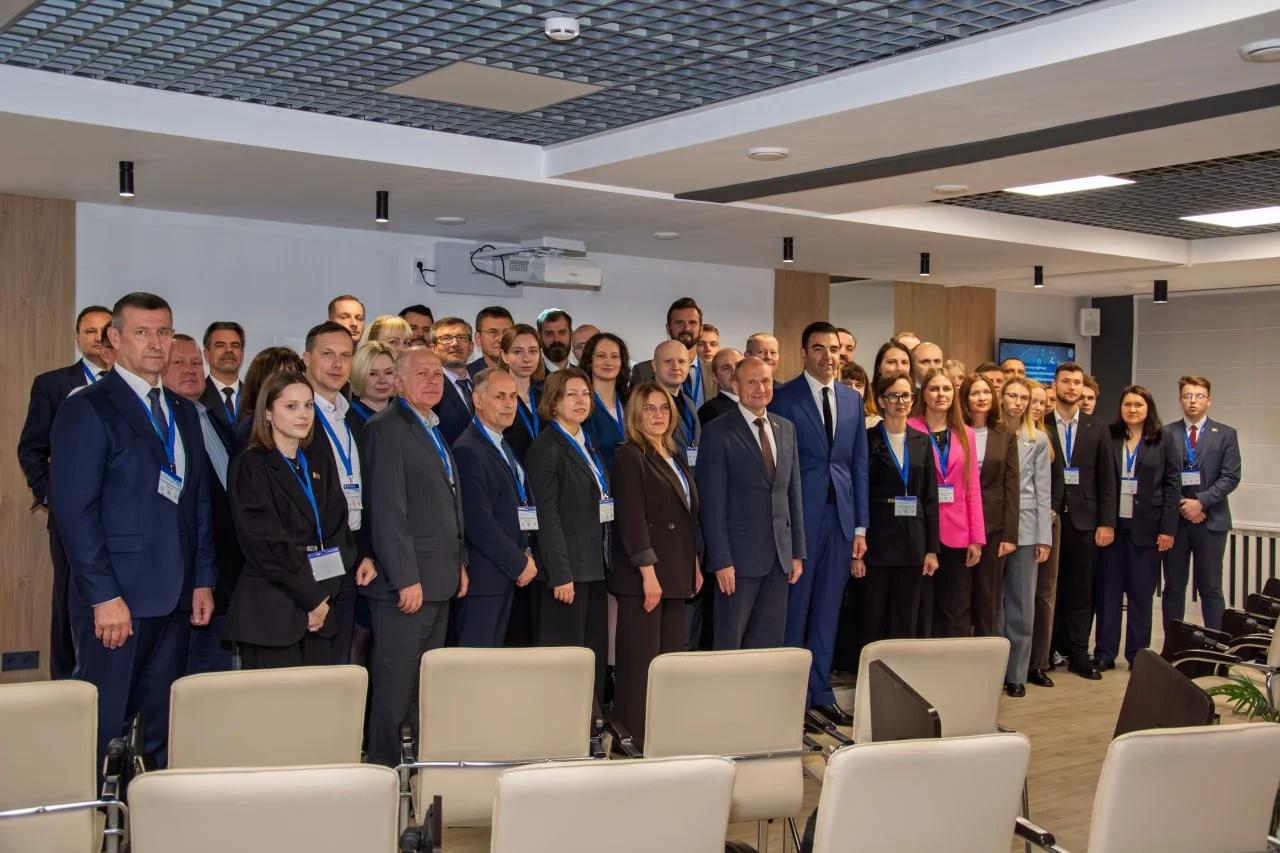
The National Traffic Exchange Center (NTEC)'s expert approaches to building secure AI systems were presented at the Republican seminar-training 'Using AI Tools in the Professional Activities of Civil Servants,' which took place on October 21-22, 2026, in Minsk. The event, organized by the Ministry of Communications and Informatization of the Republic of Belarus together with the Belarusian State Academy of Communications (BSAC) and the Regional Office of the International Telecommunication Union (ITU), brought together leaders and specialized professionals from government bodies, agencies, and members of the country's expert community.
The main goal of the large-scale workshop was to develop a scientific and methodological foundation and practical skills for using large language models (LLMs) in the public sector. During the event, experts and participants discussed legal regulations, ethical issues, as well as the challenges, risks, and infrastructure requirements that come with implementing artificial intelligence (AI) technologies in professional work.
The HARNESS Concept: from a computing core to a managed rocess
The program on the first day was dedicated to the fundamental basics of ICT policy. To cover the technological aspects of the safe implementation of neural networks, the event's organizing committee invited experts from the National Traffic Exchange Center (NTEC) to participate.
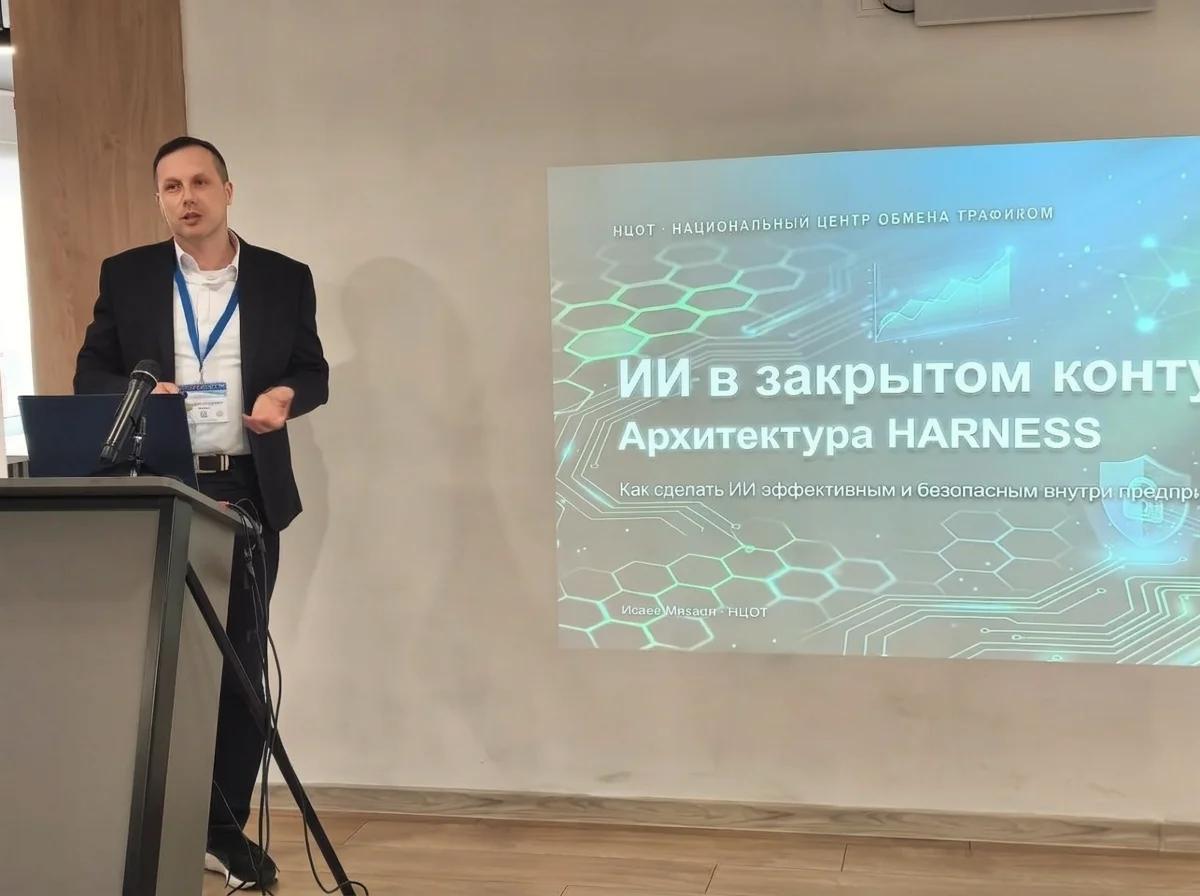
Mikhail Isaev, lead software engineer at NTEC, gave a talk called 'Safe AI in the Organizational Loop: HARNESS Architecture' as part of the first themed session 'Government Policy and Regulation of Artificial Intelligence Use: Platform, Economy, and Implementation'.
In his speech, the speaker went into detail about global AI development practices, drawing a historical analogy with the Industrial Revolution at the turn of the 19th–20th centuries. As history has shown, simply replacing a steam engine with an electric motor in old workshops didn’t boost productivity until the machines and processes were completely rebuilt for the new type of drive.
A similar situation is seen today in the field of AI. The neural network (model) itself is just a computational 'processor' or 'speech center.' High efficiency is achieved through the HARNESS architecture – creating a specialized infrastructure 'wrapper' (an operating system for AI) that integrates the model into the specific workflows of a company.
NTEC specialists spent a year developing, researching, and adapting these approaches for use within a closed organizational environment. This approach helps address the key challenges that limit the use of AI in the public sector:
- Data isolation in a closed loop: the model runs strictly on local server infrastructure, which prevents sending any service information to external commercial or foreign cloud services.
- Context management and accuracy: according to global research (including NeurIPS materials), large language models lose accuracy when processing excessive amounts of data. A dynamic context-building architecture (based on hybrid memory, vectors, and connection graphs) selectively provides the model with only relevant information, improving the accuracy of answers on complex tasks by up to 20%.
- Software-based access control: AI agent security is ensured not by declarative bans in chat, but by a strict system architecture, where the digital assistant has no rights to perform unauthorized actions in critical databases.
- Transparency of work: every step and logical chain of the AI is continuously recorded in system logs for later auditing, and the quality of the final result is checked by independent internal filters.
Practical testing of approaches
As examples of successful implementation of the HARNESS principles, seminar participants were shown internal analytical tools that were developed and tested within the NTEC framework:
- Tender monitoring: automated search and smart analysis of competitive procurement to optimize the sale of products and services offered by the company.
- Recruitment: matching resumes with company job openings based on building semantic connection graphs to quickly identify relevant candidates.
- Jira analytics: turning task tracker data into manageable dashboards and clear reports to spot bottlenecks in project execution.
During the practical sessions on the second day, the training participants reinforced their skills in preparing prompts for solving various professional tasks and confirmed the key point of the expert community: successful AI integration requires high-quality departmental data and strict order in workflows. At the same time, the main priority of state ICT policy remains unchanged – the final management decision always stays with a human.
Development of expert interaction
The recent workshop-training highlighted the importance of synergy between technology solution developers and government agencies. NTEC's accumulated scientific and technical experience in cybersecurity and designing local AI systems is meant to be a reliable support for agencies as they transition to a data-driven economy.
NTEC plans to continue actively participating in shaping expert dialogue and preparing methodological recommendations for the safe integration of artificial intelligence, as well as actively implementing AI in its own products and business processes.
See you at the new venues!
NTEC introduced the concept of safe AI at the national seminar
October 23 2026
The National Traffic Exchange Center (NTEC)'s expert approaches to building secure AI systems were presented at the Republican seminar-training 'Using AI Tools in the Professional Activities of Civil Servants,' which took place on October 21-22, 2026, in Minsk. The event, organized by the Ministry of Communications and Informatization of the Republic of Belarus together with the Belarusian State Academy of Communications (BSAC) and the Regional Office of the International Telecommunication Union (ITU), brought together leaders and specialized professionals from government bodies, agencies, and members of the country's expert community.
The main goal of the large-scale workshop was to develop a scientific and methodological foundation and practical skills for using large language models (LLMs) in the public sector. During the event, experts and participants discussed legal regulations, ethical issues, as well as the challenges, risks, and infrastructure requirements that come with implementing artificial intelligence (AI) technologies in professional work.
The HARNESS Concept: from a computing core to a managed rocess
The program on the first day was dedicated to the fundamental basics of ICT policy. To cover the technological aspects of the safe implementation of neural networks, the event's organizing committee invited experts from the National Traffic Exchange Center (NTEC) to participate.
Mikhail Isaev, lead software engineer at NTEC, gave a talk called 'Safe AI in the Organizational Loop: HARNESS Architecture' as part of the first themed session 'Government Policy and Regulation of Artificial Intelligence Use: Platform, Economy, and Implementation'.
In his speech, the speaker went into detail about global AI development practices, drawing a historical analogy with the Industrial Revolution at the turn of the 19th–20th centuries. As history has shown, simply replacing a steam engine with an electric motor in old workshops didn’t boost productivity until the machines and processes were completely rebuilt for the new type of drive.
A similar situation is seen today in the field of AI. The neural network (model) itself is just a computational 'processor' or 'speech center.' High efficiency is achieved through the HARNESS architecture – creating a specialized infrastructure 'wrapper' (an operating system for AI) that integrates the model into the specific workflows of a company.
NTEC specialists spent a year developing, researching, and adapting these approaches for use within a closed organizational environment. This approach helps address the key challenges that limit the use of AI in the public sector:
- Data isolation in a closed loop: the model runs strictly on local server infrastructure, which prevents sending any service information to external commercial or foreign cloud services.
- Context management and accuracy: according to global research (including NeurIPS materials), large language models lose accuracy when processing excessive amounts of data. A dynamic context-building architecture (based on hybrid memory, vectors, and connection graphs) selectively provides the model with only relevant information, improving the accuracy of answers on complex tasks by up to 20%.
- Software-based access control: AI agent security is ensured not by declarative bans in chat, but by a strict system architecture, where the digital assistant has no rights to perform unauthorized actions in critical databases.
- Transparency of work: every step and logical chain of the AI is continuously recorded in system logs for later auditing, and the quality of the final result is checked by independent internal filters.
Practical testing of approaches
As examples of successful implementation of the HARNESS principles, seminar participants were shown internal analytical tools that were developed and tested within the NTEC framework:
- Tender monitoring: automated search and smart analysis of competitive procurement to optimize the sale of products and services offered by the company.
- Recruitment: matching resumes with company job openings based on building semantic connection graphs to quickly identify relevant candidates.
- Jira analytics: turning task tracker data into manageable dashboards and clear reports to spot bottlenecks in project execution.
During the practical sessions on the second day, the training participants reinforced their skills in preparing prompts for solving various professional tasks and confirmed the key point of the expert community: successful AI integration requires high-quality departmental data and strict order in workflows. At the same time, the main priority of state ICT policy remains unchanged – the final management decision always stays with a human.
Development of expert interaction
The recent workshop-training highlighted the importance of synergy between technology solution developers and government agencies. NTEC's accumulated scientific and technical experience in cybersecurity and designing local AI systems is meant to be a reliable support for agencies as they transition to a data-driven economy.
NTEC plans to continue actively participating in shaping expert dialogue and preparing methodological recommendations for the safe integration of artificial intelligence, as well as actively implementing AI in its own products and business processes.
See you at the new venues!